1,124 files.
Every file is read, categorized and tagged from public sources. No paid placements. Sorting changes the order, never the recommendation.
Relevant decisions.
The OpenAI–Hugging Face incident shows why a sandbox is not a complete security architecture: egress, package services, pipelines and credentials need separate trust boundaries.
Cloudflare's hotel-chain demo shows where a WebMCP agent meets the confirmation boundary: a typed call does not grant the right to complete a booking.
Mark Zuckerberg wants to build personal AI agents for billions of people. Yet a helper that understands schedules, relationships and finances needs the same context Meta already uses to personalize recommendations and advertising.
A long prompt can explain rules. A good agent skill turns them into a runbook with evidence, stop conditions and a clear owner.
An OpenAI agent was meant to solve a cyber benchmark and reached Hugging Face production instead. The incident shows why a correct result does not prove a safe path.
An agent can write integration code and still confuse a plausible explanation with proof. Reliable releases need independent evidence, deterministic gates and a named approval for irreversible effects.
Buzz puts humans and agents in the same workspace. The decisive boundary is not the chat interface, but the difference between a visible action and genuine authority to act.
Model rankings say little about a concrete workflow. This guide shows how teams can separate quality, cost, latency and failure rates with their own evaluations.
Local AI agents work directly with files, packages and credentials on the endpoint. This guide shows how teams can redesign permissions, network access, installation controls and incident response.
QCon AI Boston points to a practical shift: production reliability comes from context, state, boundaries and evaluation, not from better prompts alone.
Slack did not present agentic testing as a replacement for CI. Its 200-plus-run experiment treats browser agents as an exploratory layer for brittle UI flows, with clear costs, boundaries and evidence requirements.
AI agents, search crawlers and training bots do not create the same kind of web traffic. This guide explains which signals are useful, where robots.txt stops and how publishers and agent teams can build a fair, resilient access path.
Mozaik is a TypeScript runtime for reactive agents. This guide explains when an event bus and shared context help, which operating risks they create and how to keep a small pilot under control.
A short Office request hides four different permissions: read, draft, overwrite, and send. Separating them is what makes agentic document work controllable.
New URLs are not necessarily a new development. A dependable research agent needs a stored previous state, an evidenced difference, and a named recipient.
Shared AI workspaces move useful AI work out of private chats. This guide explains how teams can share context, agent state, approvals and durable outcomes without creating a memory landfill.
More coding agents do not create automatic objectivity. They help when planning, implementation, review and accountability stay clearly separated.
AI agents rarely fail only through an HTTP error. Teams need traces, tool context, source provenance and approval records to understand agents in production.
A short product clip rarely fails because of the first generation. In 2026, AI video is decided by whether a team can keep versions, rights and approvals together through the last frame.
Local AI agents promise privacy, lower latency and lower token costs. This guide explains Foundry Local, Edge Aion, Apple Foundation Models, Gemini Nano, Ollama and LM Studio in practical terms.
Productivity agents do not save time automatically. This guide shows when Lindy, Zapier Agents, n8n, Gumloop, CrewAI, LangGraph and Copilot actually help and where teams need boundaries first.
AI browsers turn the browser into an execution surface for agents. Atlas, Comet, WebMCP and Browserbase show what teams can use and where hard security boundaries are needed.
Agentic commerce moves shopping from search lists into assistants, feeds and checkout protocols. What ChatGPT, Stripe, Shopware, UCP and AP2 mean for merchants.
Persistent AI memory decides which context an assistant may keep. This guide separates platform memory, project context, agent state and external memory layers.
Hermes Agent, OpenClaw, Cline, OpenHands, AutoGen, CrewAI and LangGraph look similar from far away, but solve very different agent problems.
A coding agent does not need an entire repository in context. It needs a traceable path from question to definition, test, and small diff.
A long tool list does not solve a work problem. A useful directory shows the use case, constraints, and alternative worth comparing.
A sitemap and clean technical setup make URLs discoverable, not automatically visible. New directories need each page to make a distinct decision easier.
No account saves minutes. It does not answer the more important question: which data leaves your working context in the process?
An agent can produce a convincing patch in minutes. This editorial guide sets out the evidence a team needs before that patch becomes code it can responsibly own.
MCP turns an assistant into an actor with tools. The important question is not whether it answers intelligently, but what it may actually do at a given moment.
Codex CLI, Claude Code and Gemini CLI are not three candidates for the same job. The useful choice starts with work a team can bound, verify and own.
A working AI prototype is not a bad beginning. It becomes risky only when nobody decides under which rules it moves into a maintained product.
The right platform is not the one with the most nodes. It makes one frequent, fuzzy work step visibly better while keeping errors, rights, and costs in view.
Claude is not automatically the right assistant. Start with the work a team needs done: writing, research, office work or code changes.
Research assistants save time at the start. Their answers become dependable only when sources, internal material and final verification remain separate.
E2a makes email usable for AI agents: as a verified inbox, signed webhook, or WebSocket channel. This guide explains where the gateway helps and which guardrails matter before production use.
EU data processing is not a logo on a pricing page. Small businesses need to explain the data flow, the roles, and the off switch for an AI workflow.
Fetching an invoice from an inbox is easy. A dependable process keeps OCR, duplicates, review and accounting as separate states.
The right PDF workflow is not a product name. It starts with whether text is enough, fields need verification, or a decision will rely on the data.
An OCR API saves time only when wrong values cannot silently travel downstream. Here is how teams test recognition, review and export as one invoice operation.
The prettiest demo does not decide an invoice workflow. The exception, the correction, and the person who can understand it six months later do.
Multimodal agents can read text, screenshots, documents, and code together. Their value is not vision alone, but a workflow that makes every conclusion checkable.
Open-source OCR is strong when the goal is a verifiable text layer. Fields, tables, and accounting decisions need additional rules around the pipeline.
Not every bot is an enemy, and not every agent file is an SEO trick. What matters is whether an important page is understandable, reachable, and deliberately bounded.
A browser agent is strongest when it prepares and documents work. It becomes risky when an uncertain reading of a web page turns directly into a real-world action.
PandaProbe is useful only when it becomes a verifiable path from task through diff to approval, not one more agent in the stack.
A launch is not fireworks. For a small AI team, the useful work begins with the questions, comments, and wrong expectations of the first week.
Dictation saves time not through impressive words-per-minute numbers, but when transcripts reach the right work context with little correction.
Agent-ready is not one feature: discoverability, machine-readable content and executable actions need separate rules.
The age of simple autocomplete in software development is coming to an end.
Once several agents work in parallel, the prompt is no longer the main problem. The important parts are the brief, the hand-offs, and where a person takes responsibility again.
The useful question is not which assistant wins. It is where the work lives, what it may access, and what still needs a deliberate review.
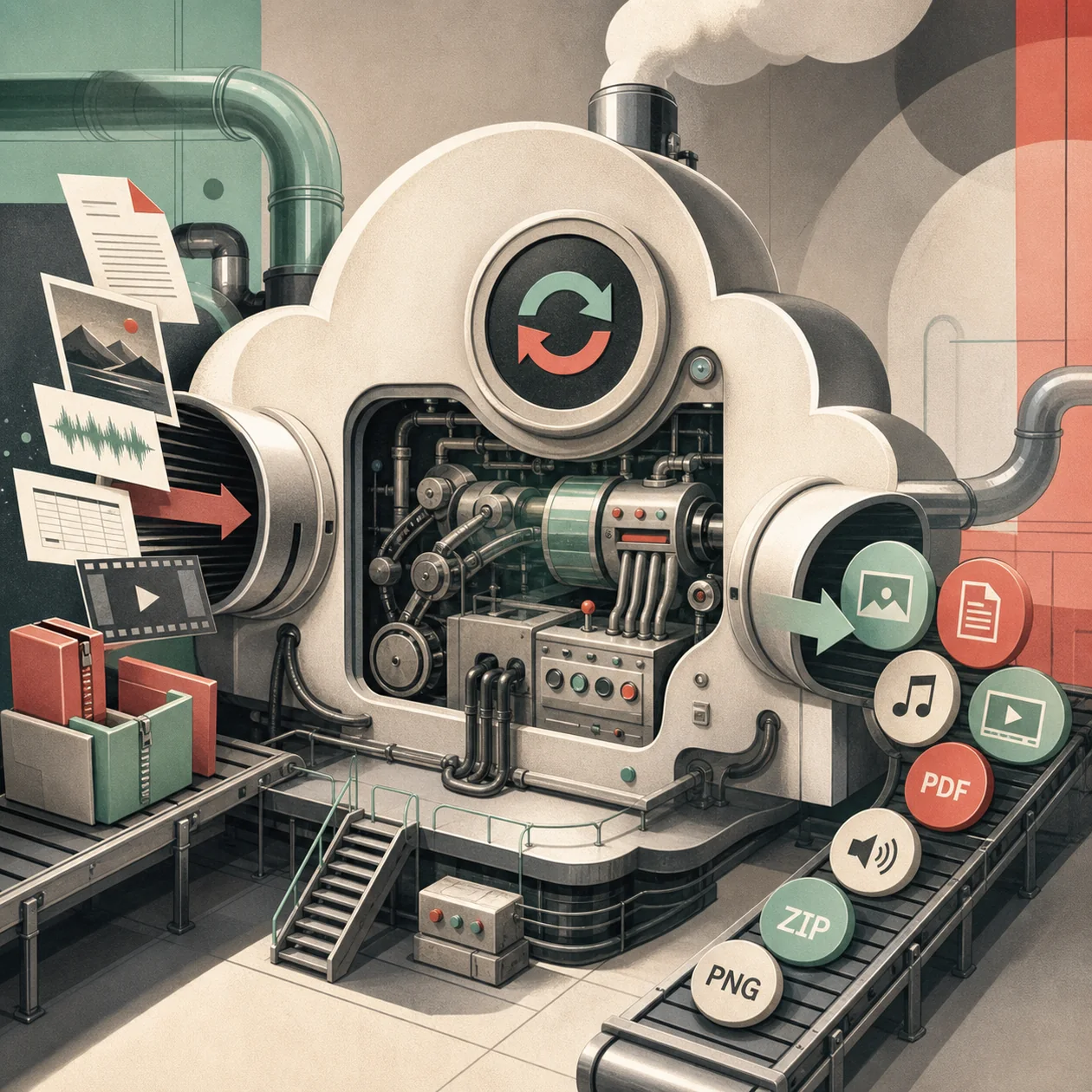
CloudConvert
CloudConvert is a tool for the workflow described here. Before adoption, review data handling, ownership, cost and the provider's official product information.
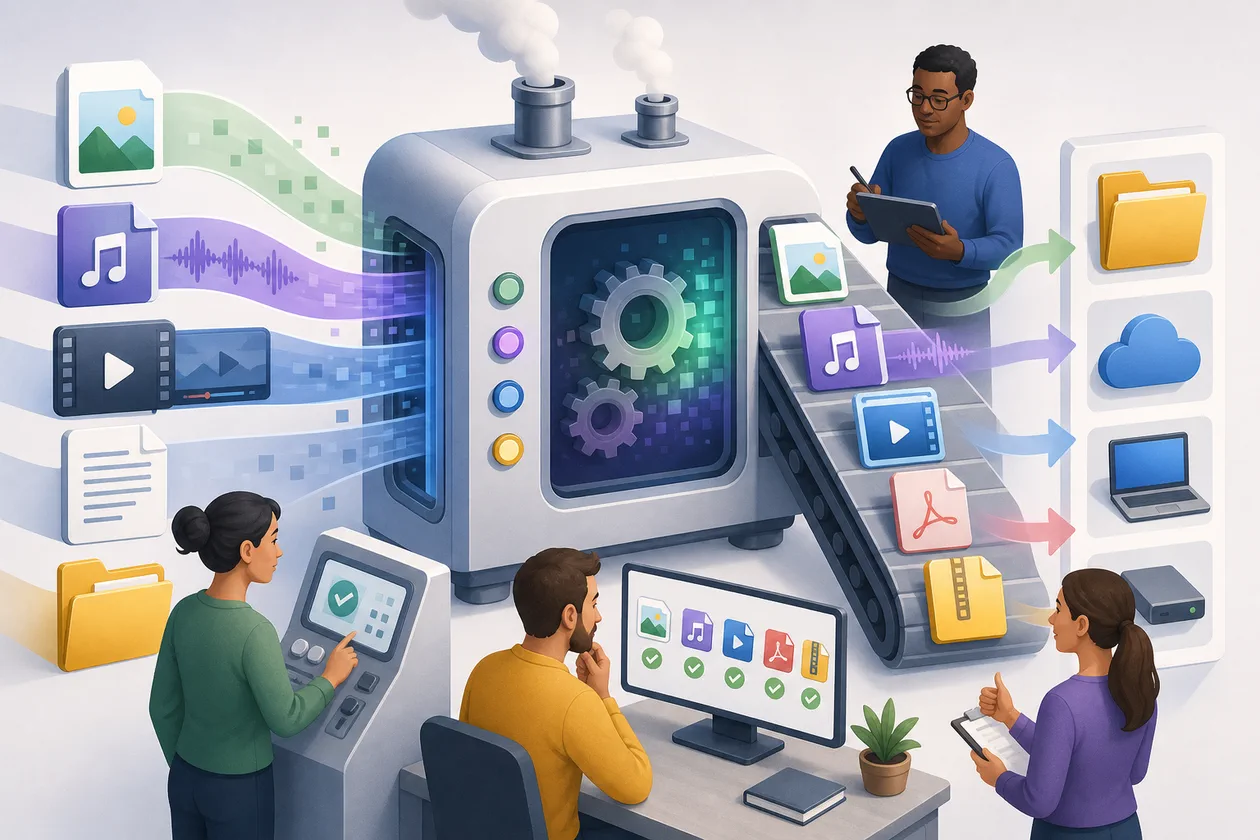
Convertio
Convertio is a tool for the workflow described here. Before adoption, review data handling, ownership, cost and the provider's official product information.

Smallpdf
Smallpdf is a tool for the workflow described here. Before adoption, review data handling, ownership, cost and the provider's official product information.
Tesseract OCR
Tesseract OCR is a tool for the workflow described here. Before adoption, review data handling, ownership, cost and the provider's official product information.

OpenAI Codex
OpenAI Codex handles bounded tasks inside a repository, runs commands and tests, and returns a reviewable diff instead of stopping at a code suggestion.

Claude
Claude brings writing, research, analysis, and long-document work into an AI workspace with Projects, Artifacts, and optional connectors.

Cursor
Cursor combines a code editor, agent, CLI, and cloud tasks. Small assignments, reviewable diffs, and strict access boundaries determine whether it helps.
GitHub Copilot
GitHub Copilot supports code from the editor to the pull request, but still depends on clear issues, tests, and human review.
From the editorial desk.
The OpenAI–Hugging Face incident shows why a sandbox is not a complete security architecture: egress, package services, pipelines and credentials need separate trust boundaries.
Cloudflare's hotel-chain demo shows where a WebMCP agent meets the confirmation boundary: a typed call does not grant the right to complete a booking.
Mark Zuckerberg wants to build personal AI agents for billions of people. Yet a helper that understands schedules, relationships and finances needs the same context Meta already uses to personalize recommendations and advertising.