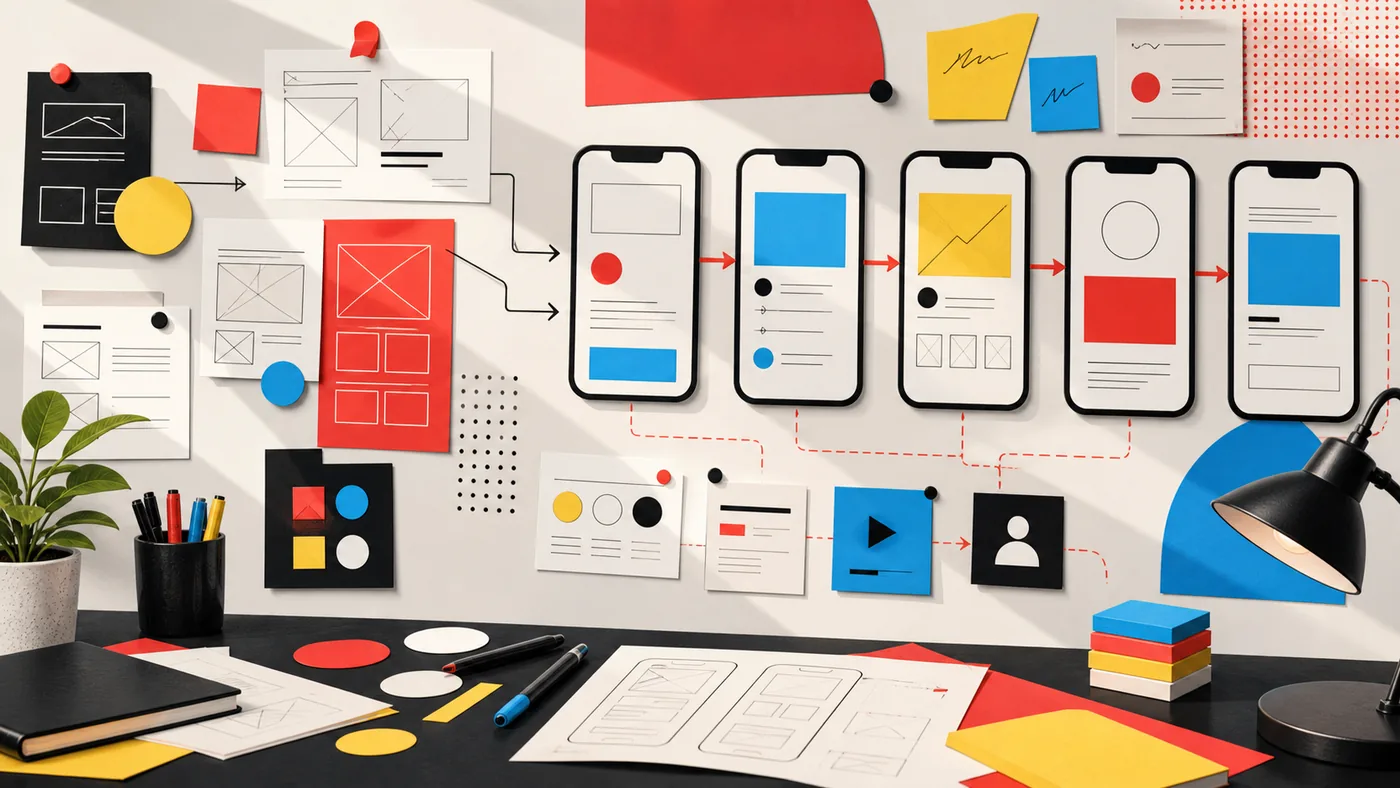
Before developing a new returns flow, the product team builds five decisive screens in Marvel and links them into a clickable journey. The usability session does not ask whether people like it; it observes where they stop or form the wrong expectation. Copy and sequence are then revised. Marvel makes ideas testable early, but it is neither a production interface nor a replacement for a design system, accessibility testing, or technical feasibility.
Marvel is a platform for prototyping, wireframes, design collaboration, user testing, and handoff.
The focus is fast product visualization: ideas should become clickable before engineering time is spent on implementation.
Who is it for?
Marvel fits product teams, designers, founders, and agencies that want to show prototypes quickly and collect feedback. Figma is the broader standard in many teams; Marvel remains interesting when simple prototyping and testing flows matter most.
Typical use cases
- Turn wireframes into clickable prototypes
- Collect early user feedback before development
- Align product ideas with stakeholders
- Prepare design handoff and lightweight specifications
Core features
- Prototyping and wireframing
- Collaboration and feedback
- User-testing-oriented workflows
- Handoff for product and engineering teams
Pros and cons
Pros
- Fast path from idea to clickable prototype
- Good for early product validation
- Lighter than large design-system setups
Cons
- Figma is more established in many teams
- Not always the first choice for complex design systems
- Integrations and team standards need checking
Workflow fit
Marvel is useful when the first clickable prototype needs to exist quickly. For long-term design-system management, Figma is usually the stronger comparison.
Privacy & data notes
Prototypes can include unpublished product ideas, customer data, or internal roadmaps. Sharing settings and test links should be controlled.
Pricing & costs
Marvel offers different plans for individuals and teams. The key factors are projects, users, testing features, and handoff needs.
Go to provider: https://marvelapp.com/
Editorial assessment
Marvel is useful when the first clickable prototype needs to exist quickly. For long-term design-system management, Figma is usually the stronger comparison.
Open frequently asked questions
FAQ
Is Marvel a UI design tool?
Yes, especially for prototyping, wireframes, and feedback.
Is Marvel better than Figma?
Not generally. Figma is broader; Marvel can be leaner for simple prototyping workflows.
Can Marvel support user testing?
Yes, testing-oriented features are part of the value proposition.
What should a prototype test measure?
Not taste, but whether people understand the intended journey, form the right expectations, and complete the central task without explanation.